2025 Feb 5;38(3):291-303.

Your guide to peptides in 2026
Your guide to peptides in 2026

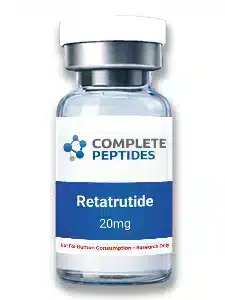
Retatrutide is a widlely talked-about compound in weight-management, metabolic health, and obesity research right now.
It has attracted huge attention because it belongs to a new generation of investigational medicines being studied for their effect on body weight, appetite, blood sugar control, and metabolic function. Retatrutide is being developed by Eli Lilly and is currently described by the company as an investigational once-weekly triple hormone receptor agonist. That means it is designed to act on three different hormone receptors involved in metabolism and appetite regulation: GIP, GLP-1, and glucagon.
This is what makes Retatrutide so interesting.
Most people have now heard of GLP-1 medicines such as semaglutide, and many have heard of dual-action medicines such as tirzepatide. Retatrutide goes a step further by targeting three pathways instead of one or two. Researchers are studying whether this triple-action approach may produce stronger effects on weight loss, appetite, energy balance, and metabolic health.
The excitement around Retatrutide comes from early clinical trial results. In a phase 2 trial published in The New England Journal of Medicine, adults with obesity who received Retatrutide for 48 weeks had substantial reductions in body weight. The study reported average weight reductions of up to 24.2% at 48 weeks in one of the higher-dose groups.
That is why Retatrutide is being talked about so much.
It is not just another weight-loss compound. It represents a possible next step in metabolic research, where scientists are exploring how multiple hormone pathways can be used together to influence appetite, weight, blood sugar, and energy balance.
Retatrutide has also been studied in people with type 2 diabetes. A phase 2 study reported clinically meaningful improvements in blood sugar control and strong reductions in body weight, which adds to the interest around its future potential in metabolic disease research.
From a positive research point of view, Retatrutide is exciting because it sits at the centre of one of the fastest-moving areas in modern medicine: metabolic health. Obesity, insulin resistance, type 2 diabetes, fatty liver disease, and cardiovascular risk are all connected to wider metabolic function, so compounds that can influence these pathways are being studied very closely.
However, this part is important: Retatrutide is not currently FDA-approved, MHRA-approved, or EMA-approved.
Eli Lilly states that Retatrutide is an investigational medicine legally available only to people taking part in Lilly clinical trials, and that it has not been reviewed or approved by any regulatory agency. Lilly also warns that no one should take anything claiming to be Retatrutide outside of a Lilly-sponsored clinical trial.
The honest way to describe Retatrutide is this:
It is one of the most exciting investigational compounds in weight-management and metabolic research, with strong early trial results, but it is still in clinical development and should not be treated as an approved medicine or general-use product.
Key Takeaway
Retatrutide is a once-weekly investigational triple-action compound being studied for obesity, weight management, type 2 diabetes, and metabolic health.
It is exciting because early studies have shown substantial weight-loss results, and it may represent the next major step after GLP-1 and dual-action medicines.
However, Retatrutide is not currently approved by the FDA, MHRA, or EMA. It should not be presented as an approved medicine, legal prescription product, or safe general-use peptide. At present, legitimate access is through clinical trials only.
2025 Feb 5;38(3):291-303.
doi: 10.1080/08998280.2025.2456441. eCollection 2025.
Click here to read peer reviewed studies
Summary of the study
This PubMed page is for a 2025 review paper about retatrutide, an experimental weight-loss drug that acts on three hormone systems involved in appetite, blood sugar, and metabolism: GLP-1, GIP, and glucagon. The paper pooled results from 3 randomized controlled trials with 878 adults with obesity, comparing retatrutide with placebo.
Main finding: people taking retatrutide lost substantially more weight than people taking placebo. Across the studies, retatrutide was linked with about 14.3% greater body-weight reduction, plus reductions in BMI, waist size, fasting blood sugar, HbA1c, and blood pressure.
Safety finding: the review did not find a statistically significant overall difference in adverse events compared with placebo, and the authors described the safety profile as “appropriate.” But that does not mean risk-free; drugs in this family commonly cause gastrointestinal side effects, and the evidence base here was still small.
Bottom line: retatrutide looks promising for obesity treatment and may also improve several metabolic health markers, but the authors stress that larger and longer-term trials are needed before we can be confident about long-term effectiveness and safety.
In everyday terms: this review says retatrutide appears to help people lose a lot of weight and improve blood-sugar and blood-pressure measures, but the evidence is still early and not enough to settle long-term safety.
Important Disclaimer
This article is for educational and informational purposes only. It is not medical advice, dosage guidance, or a recommendation to use Retatrutide or any other compound.
Retatrutide is an investigational medicine and is not currently approved by the FDA, MHRA, EMA, or any other regulator for general medical use. Anyone considering weight-management treatments, peptides, GLP-1 medicines, or metabolic compounds should speak with a qualified healthcare professional first.
General Reconstitution Information – Retatrutide
Retatrutide is commonly supplied in a freeze-dried form and is typically reconstituted using bacteriostatic water. The vial should be handled gently during reconstitution. Shaking should be avoided, with gentle swirling often preferred. Slowly introduce the water to the vile containing the peptide for best results.
Example Concentrations
10mg Retatrutide + 1ml bacteriostatic water
10mg Retatrutide + 2ml bacteriostatic water
10mg Retatrutide + 4ml bacteriostatic water
Researchers may select different dilution volumes depending on the level of measurement precision required during handling and laboratory work. It is always advised to build up tolerance to this peptide by mixing more water at first.
Storage Guidance
Many research compounds are typically stored refrigerated after reconstitution to help maintain stability during laboratory handling.
Find out more about Retatrutide here
No items in your cart. Go on, fill it up with something you love!
Start Shopping Now